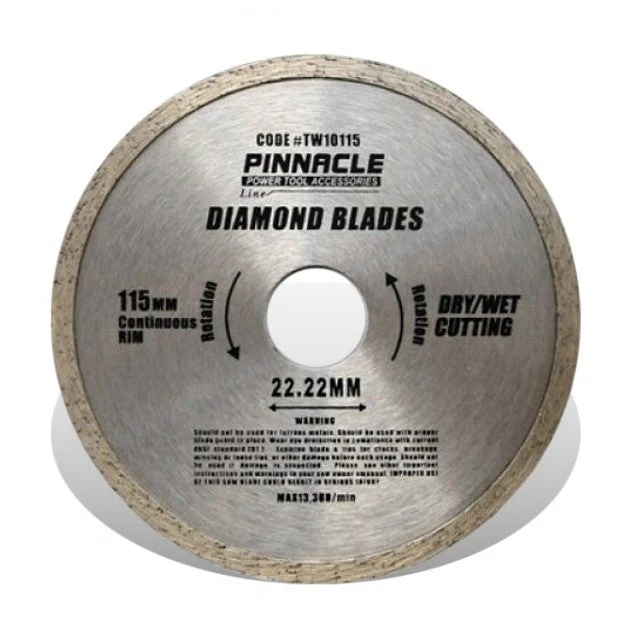
Tork Craft | Diamond Blade Continuous Rim 115 X 22,22mm Pinnacle

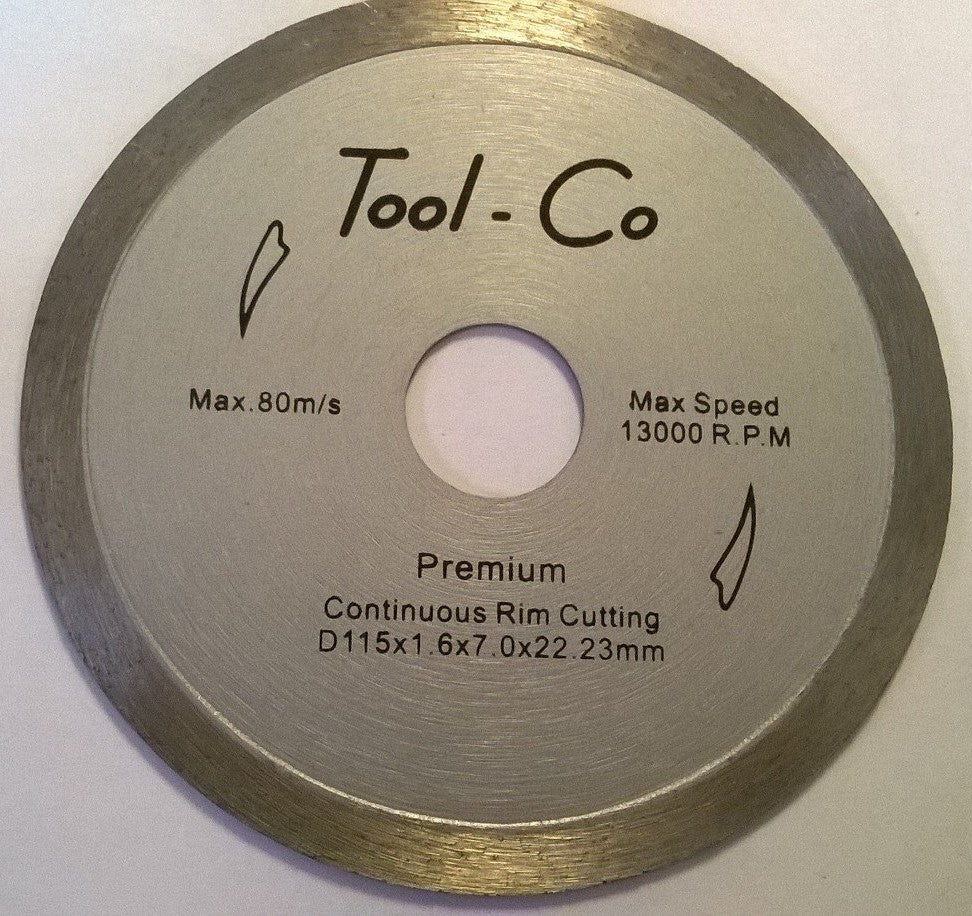
Diamond Blade
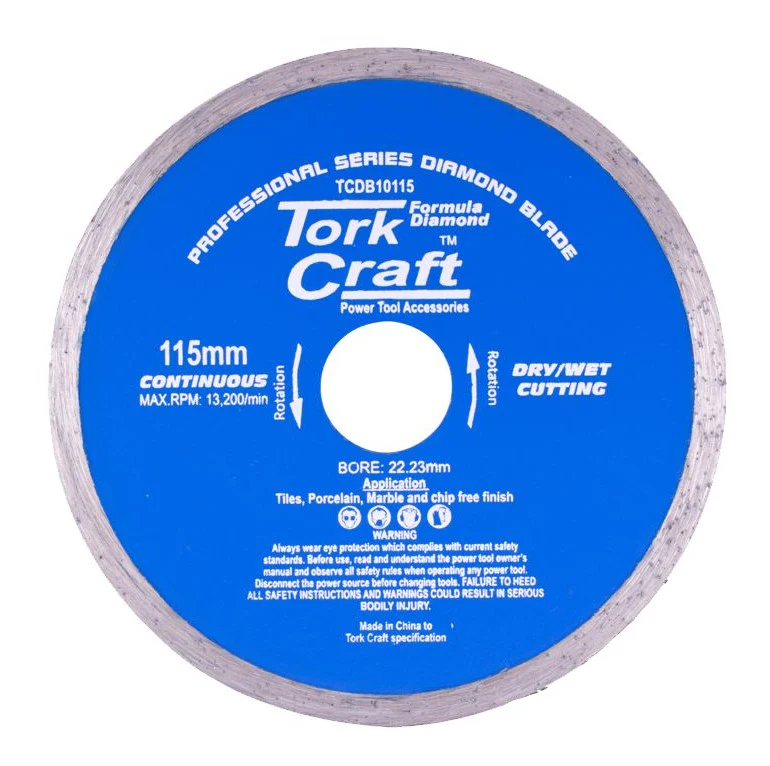
Diameter: Ø115mm
Bore: Ø22,23mm
Max rpm: 13,300
Use: Marble, granite, porcelain & ceramic tiles
- The continuous-rim diamond blade is also known as a wet-cut blade and needs to be used with water when cutting
- It cuts the slowest of the different diamond blade styles but produces the best cut
Why use water?
- Water significantly cools down the blade, allowing for a longer life. It flushes out debris to have less friction when cutting and reduces the amount of dust
- When the segment has changed colour, little to no coolant was used
Usage
- Make multiple shallow cuts instead of a single deep cut
- Do not side-grind a cutting blade
- Fit the blade in the correct rotation direction
- The life expectancy and cutting performance of the blade will be reduced when fitted reversed
- It is also prone to becoming glazed
- When a diamond blade is glazed, it feels smooth to the touch with little to no diamonds exposed
- This happens when the metal bond on the segment is too hard for the material it is cutting
- To rectify - expose more diamonds on the segments by making shallow cuts in a soft, abrasive material like limestone
- A short diamond blade life is a result of using a blade with a soft metal bond on a more abrasive material such as sandstone or asphalt
- Wet cutting will extend the life of the blade
- Select the correct blade for the material
Product Information
Product Information
Shipping & Returns
Shipping & Returns
Tork Craft | Diamond Blade Continuous Rim 115 X 22,22mm Pinnacle
Tork Craft | Diamond Blade Continuous Rim 115 X 22,22mm Pinnacle
Diamond Blade
Diameter: Ø115mm
Bore: Ø22,23mm
Max rpm: 13,300
Use: Marble, granite, porcelain & ceramic tiles
- The continuous-rim diamond blade is also known as a wet-cut blade and needs to be used with water when cutting
- It cuts the slowest of the different diamond blade styles but produces the best cut
Why use water?
- Water significantly cools down the blade, allowing for a longer life. It flushes out debris to have less friction when cutting and reduces the amount of dust
- When the segment has changed colour, little to no coolant was used
Usage
- Make multiple shallow cuts instead of a single deep cut
- Do not side-grind a cutting blade
- Fit the blade in the correct rotation direction
- The life expectancy and cutting performance of the blade will be reduced when fitted reversed
- It is also prone to becoming glazed
- When a diamond blade is glazed, it feels smooth to the touch with little to no diamonds exposed
- This happens when the metal bond on the segment is too hard for the material it is cutting
- To rectify - expose more diamonds on the segments by making shallow cuts in a soft, abrasive material like limestone
- A short diamond blade life is a result of using a blade with a soft metal bond on a more abrasive material such as sandstone or asphalt
- Wet cutting will extend the life of the blade
- Select the correct blade for the material
$1.05
Original: $3.50
-70%Tork Craft | Diamond Blade Continuous Rim 115 X 22,22mm Pinnacle—
$3.50
$1.05Product Information
Product Information
Shipping & Returns
Shipping & Returns
Description
Diamond Blade
Diameter: Ø115mm
Bore: Ø22,23mm
Max rpm: 13,300
Use: Marble, granite, porcelain & ceramic tiles
- The continuous-rim diamond blade is also known as a wet-cut blade and needs to be used with water when cutting
- It cuts the slowest of the different diamond blade styles but produces the best cut
Why use water?
- Water significantly cools down the blade, allowing for a longer life. It flushes out debris to have less friction when cutting and reduces the amount of dust
- When the segment has changed colour, little to no coolant was used
Usage
- Make multiple shallow cuts instead of a single deep cut
- Do not side-grind a cutting blade
- Fit the blade in the correct rotation direction
- The life expectancy and cutting performance of the blade will be reduced when fitted reversed
- It is also prone to becoming glazed
- When a diamond blade is glazed, it feels smooth to the touch with little to no diamonds exposed
- This happens when the metal bond on the segment is too hard for the material it is cutting
- To rectify - expose more diamonds on the segments by making shallow cuts in a soft, abrasive material like limestone
- A short diamond blade life is a result of using a blade with a soft metal bond on a more abrasive material such as sandstone or asphalt
- Wet cutting will extend the life of the blade
- Select the correct blade for the material